




entertavi
What we do

Studio design, camera systems, lighting and sound under one roof

Technicians checking camera and lighting positions on a studio floor

entertavi is a Taunton production company that has equipped studios and supported live events since 2011. We plan the room, install the equipment and send crews who operate it on the day. Each service can be booked alone or combined, depending on what your team already has in place.

  1. Broadcast studio design

    Layout, acoustics and cabling plans for television and streaming studios, drawn up together with your production team so that the room suits the way you actually make programmes, from desk positions to cable routes.

  2. Camera control systems

    Installation and configuration of camera robotics, vision mixers and remote control panels. Andrew Collins leads this work and has equipped studios for regional broadcasters, so setups are tested before handover.

  3. Lighting and live sound

    Lighting plots, rigging and programming for sets, concerts and festival stages, alongside front-of-house and monitor mixing, system tuning and signal routing. Both are planned together so stages look and sound right.

  4. Crews and workflow reviews

    Technicians for festivals, corporate parties and live broadcasts from load-in to wrap, plus reviews of signal flow, file handling and show-day procedures that help studio teams lose fewer minutes to avoidable delays.

Services
On the job

The equipment and settings we work with

Our work moves between permanent studios, outdoor stages and temporary event spaces. These scenes show the kit and the steps involved, from first cable run to the final sound check.

Studio floor with desk and camera positions

A studio plan starts on the floor: where presenters sit, where cameras move and where cables run, so that nothing crosses a walking route or blocks a sightline once the programme is live.

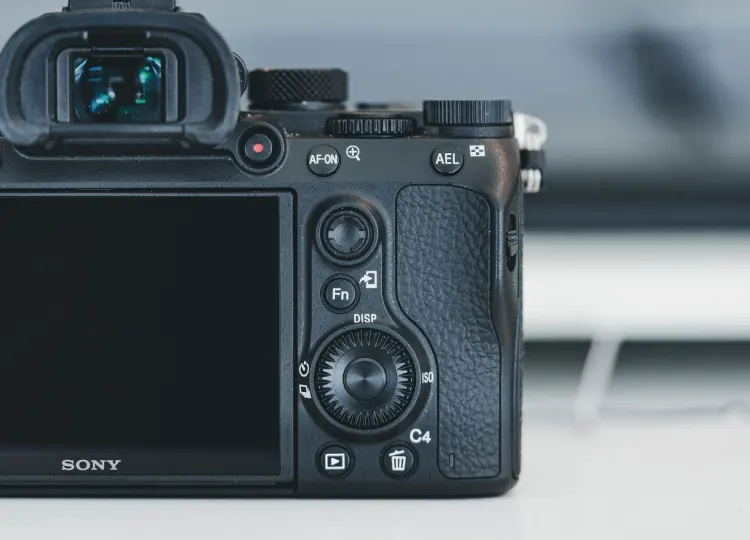
Camera on a pedestal with remote control

Robotic and pedestal cameras are set up with remote panels so a single operator can manage several shots. We configure the presets with your director and leave a written sheet for the team.

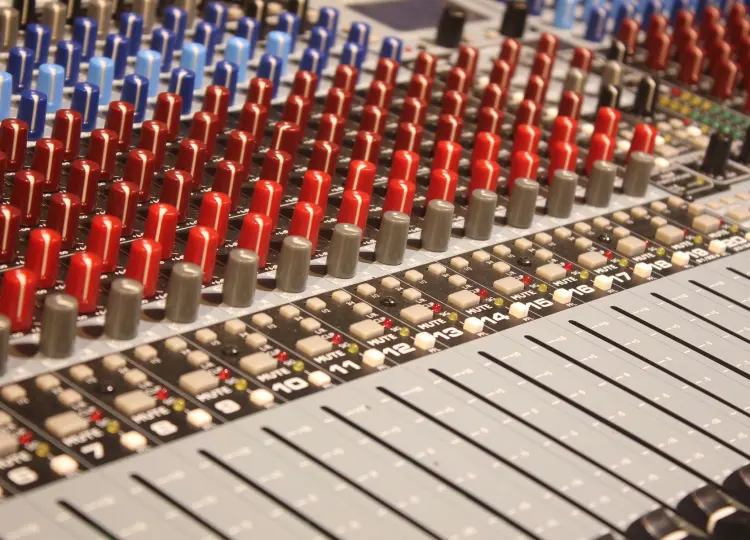
Vision mixer in a control room

Vision mixer in a control room

The vision mixer is the centre of a live gallery. We configure inputs, labels and transitions to match your show format, then rehearse with your staff until the routine feels natural.

Lighting rig above a festival stage

Lighting rig above a festival stage

Rigging is planned with load limits and safe access in mind. The lighting plot shows each fixture, its position and its programming cue, which keeps setup fast and changes easy to follow.

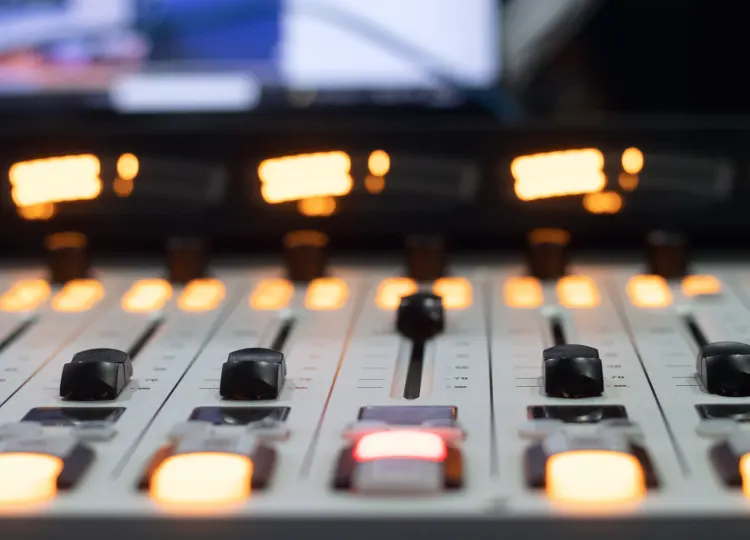
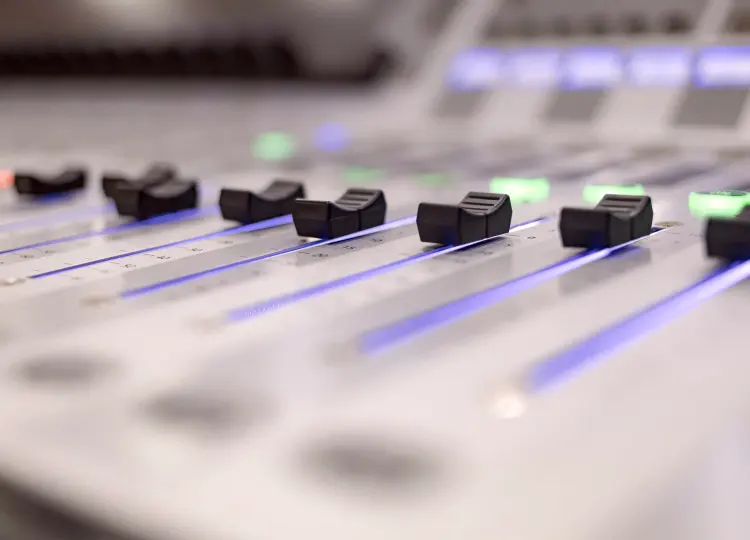
Mixing desk at front of house

Mixing desk at front of house

Front-of-house mixing balances the room while monitor mixes keep performers comfortable on stage. System tuning happens before doors open, using the venue itself rather than assumptions about it.

Crew loading in equipment at a festival

Crew loading in equipment at a festival

Load-in is where a show is won or lost. Our crews arrive with a schedule, label every case and cable, and keep the stage area organised until the final wrap and load-out.

Service in focus

Broadcast studio design

  1. Brief and site visit

    We visit the space, talk through your programmes and note the room's size, power, access and noise sources. This gives the plan a firm basis before any drawing begins.

  2. Layout and sightlines

    We place sets, cameras, desks and monitors so presenters, crew and guests can move without obstruction, with clear sightlines between the floor and the gallery.

  3. Acoustic treatment

    We recommend panelling and absorption suited to the room, aiming for speech that records cleanly without a heavy, dead sound or distracting reflections.

  4. Cabling and documentation

    Cable routes, patch points and labelling are drawn up in a plan you keep, so your engineers can maintain and extend the studio long after installation.

Our approach

Why steady shows start with planning

Most problems on show day were visible weeks earlier on paper. We spend time on signal paths, power and people before equipment arrives, because calm planning is what keeps live work reliable.

Plan the signal path

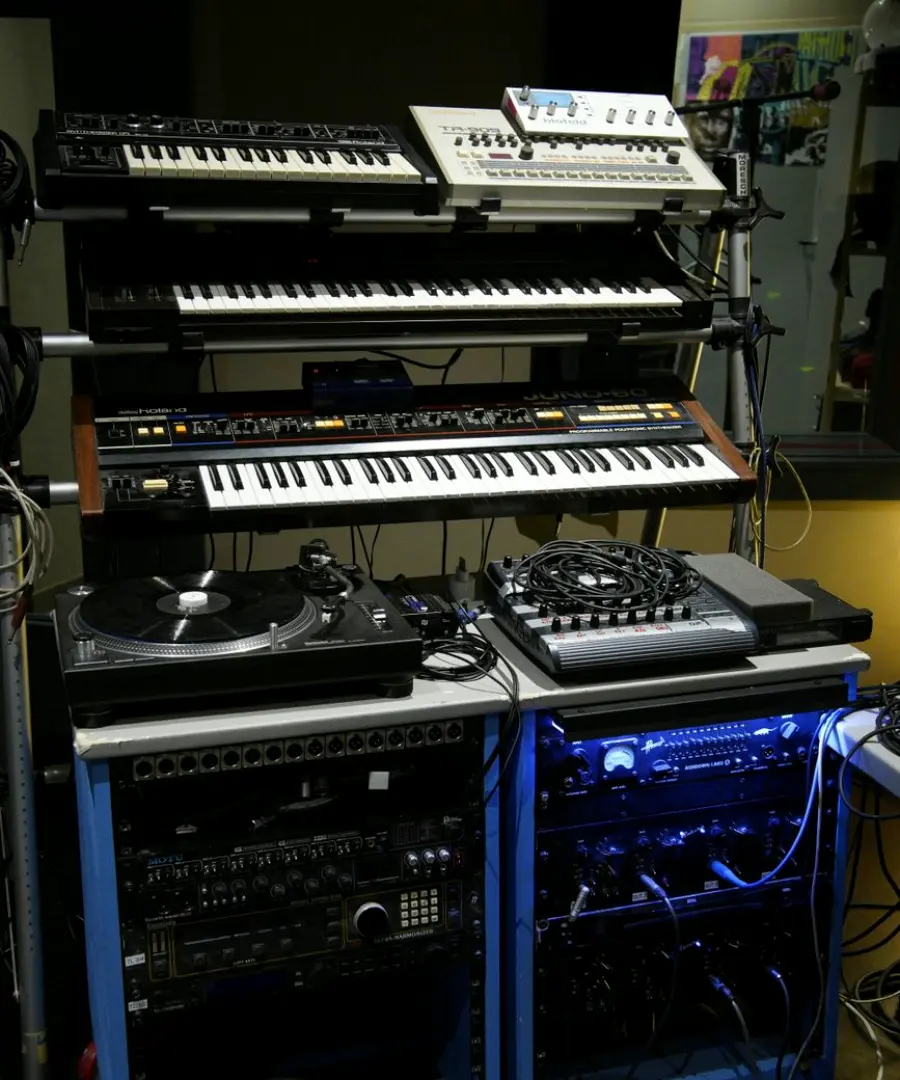
Every picture and sound travels from source to screen or speaker through a chain of devices. We map that chain in advance, noting formats, cable lengths and connection points. Doing so shows weak links early, such as a mismatched format or a long run that needs a different cable. The map is shared with your team, so anyone can trace a fault without guessing. It also becomes the reference for later changes.
Rehearse before the audience

A technical rehearsal costs less than a stalled broadcast. We run through cues, camera moves, microphone checks and cut-aways with the people who will operate them. Gaps in the plan show up while there is still time to fix them. Your staff learn the system in a quiet room, not under pressure, and we adjust the setup based on what they find awkward.

Leave clear records

When we finish, you receive written notes covering settings, presets, patch lists and contact details. The aim is that your team can run the studio or stage without calling us for routine matters. If something does need attention, the records let us diagnose it quickly. Good documentation is quiet work, but it saves many hours over the life of an installation.

How it works

From first enquiry to wrap

We keep the route simple: you describe the job, we propose a plan in writing, and we deliver it with named people. Nothing is ordered through the website itself.

  1. Enquiry

    Send a message through the contact page describing your studio or event, the dates and what you already own. A short note is enough to start the conversation.

  2. Discussion

    We talk through the details by phone or in person, and visit the site where it helps. We ask about space, audience, power and existing equipment.

  3. Written quotation

    You receive a written quotation setting out what is included, what could change the cost and the timetable. Take the time you need to read it.

  4. Delivery

    Once you confirm in writing, we schedule the work, install or crew the event and rehearse with your team so the first live run goes smoothly.

  5. Wrap and handover

    After the job we hand over notes and settings, invoice by bank transfer and remain available for questions about what we installed or operated.

Tell us about your studio or event and we will suggest a plan
Talk to us

Tell us about your studio or event and we will suggest a plan

Describe what you need, whether a studio layout, camera systems, lighting, sound or a technical crew, and we will reply with questions and a way forward through the contact page.

Contact